
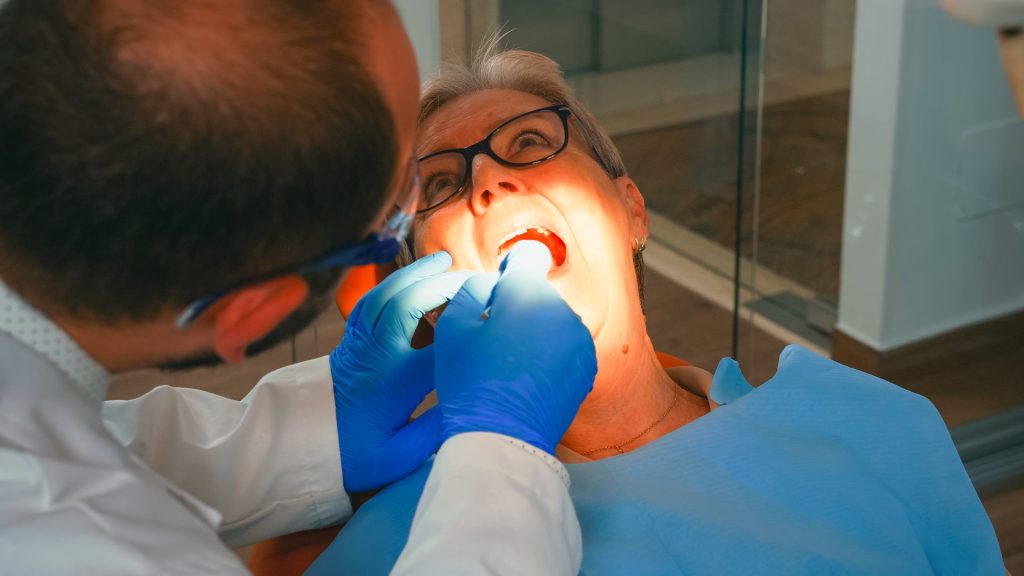
Many people think routine dental checkups are only about cleaning teeth or checking for cavities. However, a visit may also include a brief oral cancer screening, since some changes can develop without obvious symptoms. In this blog, we’ll explain what typically happens during the exam and how it supports oral cancer detection.
Step-by-Step Overview of the Screening Process
During the exam, dentists follow a simple sequence to check the mouth and surrounding areas:
- Visual check: A bright light and dental mirror help illuminate places that are difficult to see directly. The dentist scans the mouth for visible changes.
- Tissue examination: The dental professional gently palpates certain oral tissues to detect any unusual firmness, swelling, or irregular texture.
- Neck and jaw assessment: Nearby lymph nodes along the neck and jawline may be palpated to check for any enlargement.
Signs and Tissue Changes Professionals Assess
Dentists look for subtle differences in color, texture, or shape that may need closer attention. Several parts of the mouth are typically checked, including:
- Lips and inner cheeks
- Tongue surfaces and underside
- Roof and floor of the mouth
- Gums and throat
When an Area Requires Further Evaluation
Dentists may take extra steps to better understand what caused the change. This process helps them gather more information and decide whether the area should be monitored or further examined.
Additional steps may include:
- Monitoring the area during a follow-up visit
- Imaging tests to observe deeper structures
- Referral to a specialist for further examination
Screening Time and Patient Experience
The assessment is usually quick, taking only a few minutes to complete. It’s designed to fit easily within a standard dental visit without adding much time to the appointment. Most patients simply sit back while the dentist performs the check. Because the process is noninvasive, people typically describe the experience as straightforward and comfortable.
Factors That May Require More Frequent Screenings
Some people may benefit from closer monitoring depending on personal health factors. Dentists review medical history and lifestyle habits when deciding how often screenings should occur.
Recommendations may be influenced by factors such as:
- Tobacco use or alcohol consumption
- Previous oral health concerns
- Certain viral infections linked to cancer risk
- Family medical background
Stay Proactive About Your Oral Health
Regular dental screenings help professionals detect tissue changes before they progress. Tracking the mouth’s condition over time also supports oral cancer detection by helping dentists decide if further checks are needed.
If you have questions about screenings or would like to schedule an exam, contact Niagara Falls Dentistry. Our clinic welcomes patients throughout Niagara Falls, Ontario.